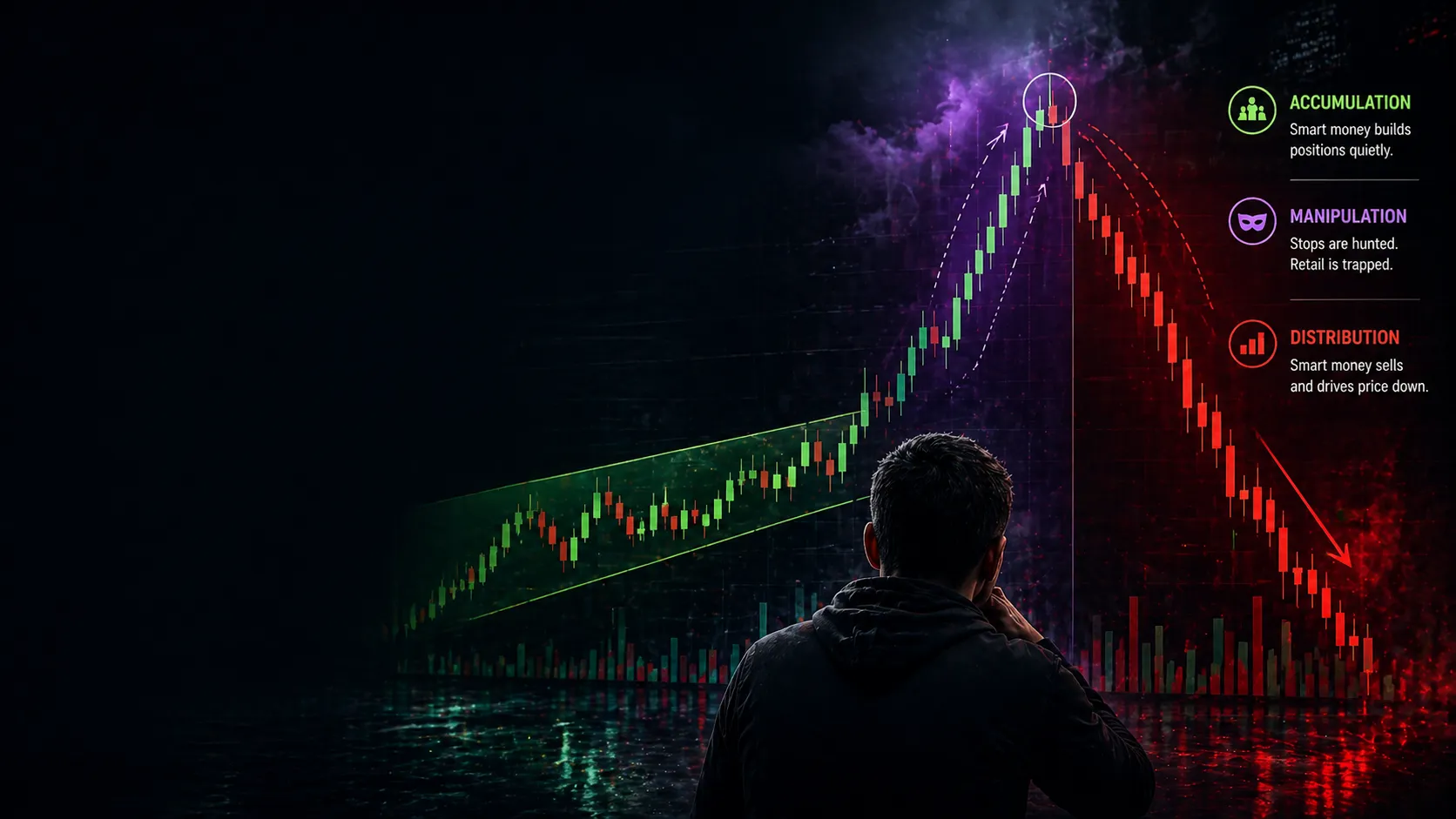

AMD is not just a pattern — it is a market cycle: accumulation, manipulation, then distribution.

The manipulation phase traps breakout traders before the real distribution move begins.

Good traders wait for confirmation: rejection, structure shift, and a clean reaction from key levels.

The Insight
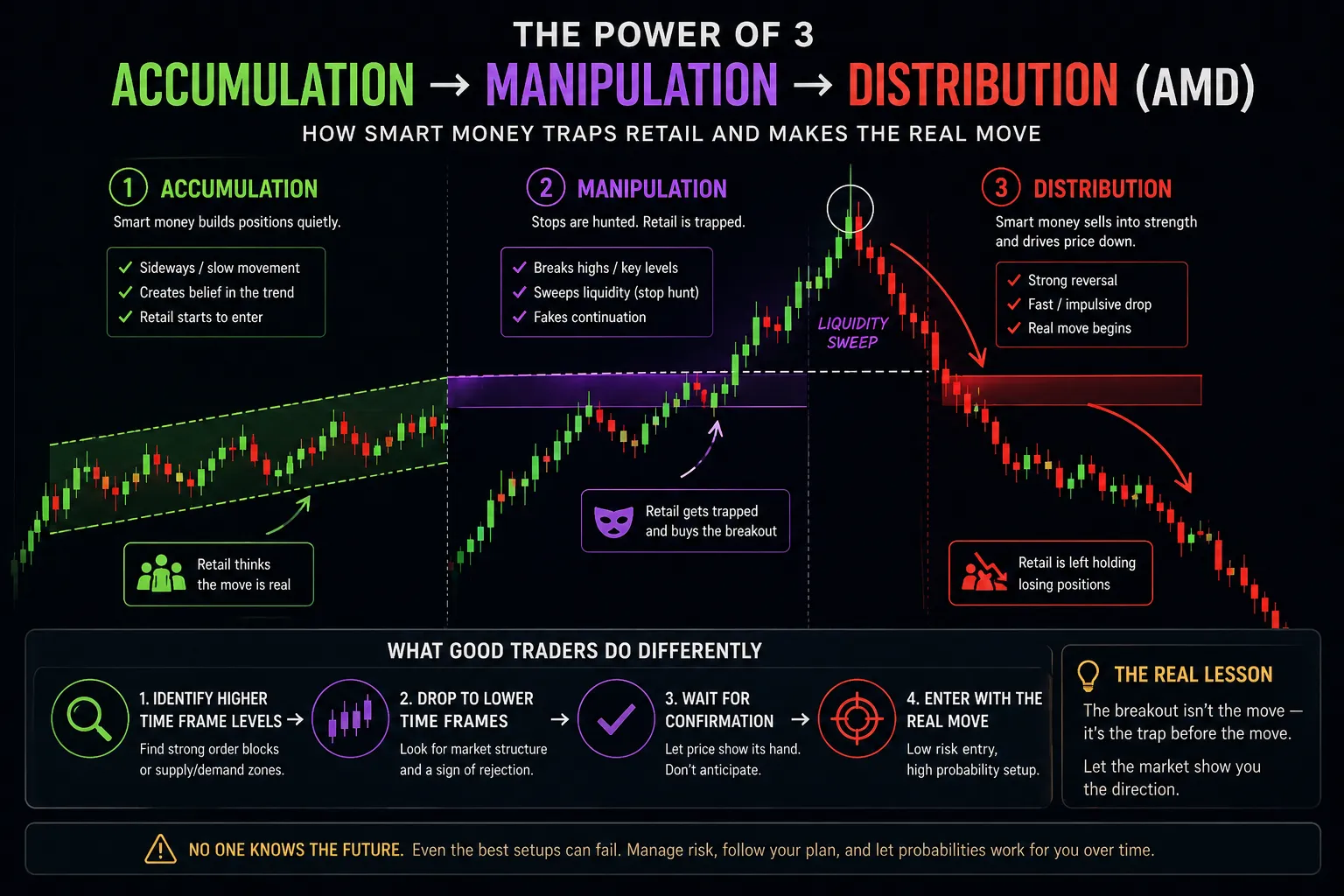
AMD stands for Accumulation, Manipulation, and Distribution. The lesson is that price often builds a controlled range or slow grind first, then creates a false move that pulls retail traders in, and only after that does the real move begin. This is why the first obvious breakout is often not the trade because it may be the trap.

What This Means
Most traders see the manipulation phase as confirmation. They see price pushing into a higher-timeframe level, breaking a short-term high, or crawling up a trendline and assume the move is real. But in the AMD model, that move can be engineered to create liquidity, trigger emotional entries, and position retail on the wrong side before distribution starts.

What Good Traders Do Differently
Good traders do not short or long blindly just because price reaches a level. They first identify higher-timeframe structure, such as an order block or supply/demand zone. Then they drop to a lower timeframe and wait for rejection, a market structure shift, and a retrace into the new lower-timeframe order block before committing. They trade the confirmation, not the anticipation.

How to Apply This
Start by marking the higher-timeframe level that matters. Then watch how price approaches it. A clean AMD setup often has a slow, choppy grind into the level, retail trendline confidence, a final push or liquidity sweep, then rejection. After the rejection, wait for price to retrace into the initiation area and prove weakness again before entering. If confirmation never appears, there is no trade.

The Real Lesson
The real lesson is that smart trading is not about predicting every top or bottom. It is about understanding how traps form, waiting for the market to show its hand, and entering only when structure confirms the idea. AMD gives traders a framework for reading the story behind the move: build the trap, trigger the crowd, then follow the real distribution.

Accumulation builds the story, manipulation sells it, and distribution punishes those who believed it.— Trading Insight