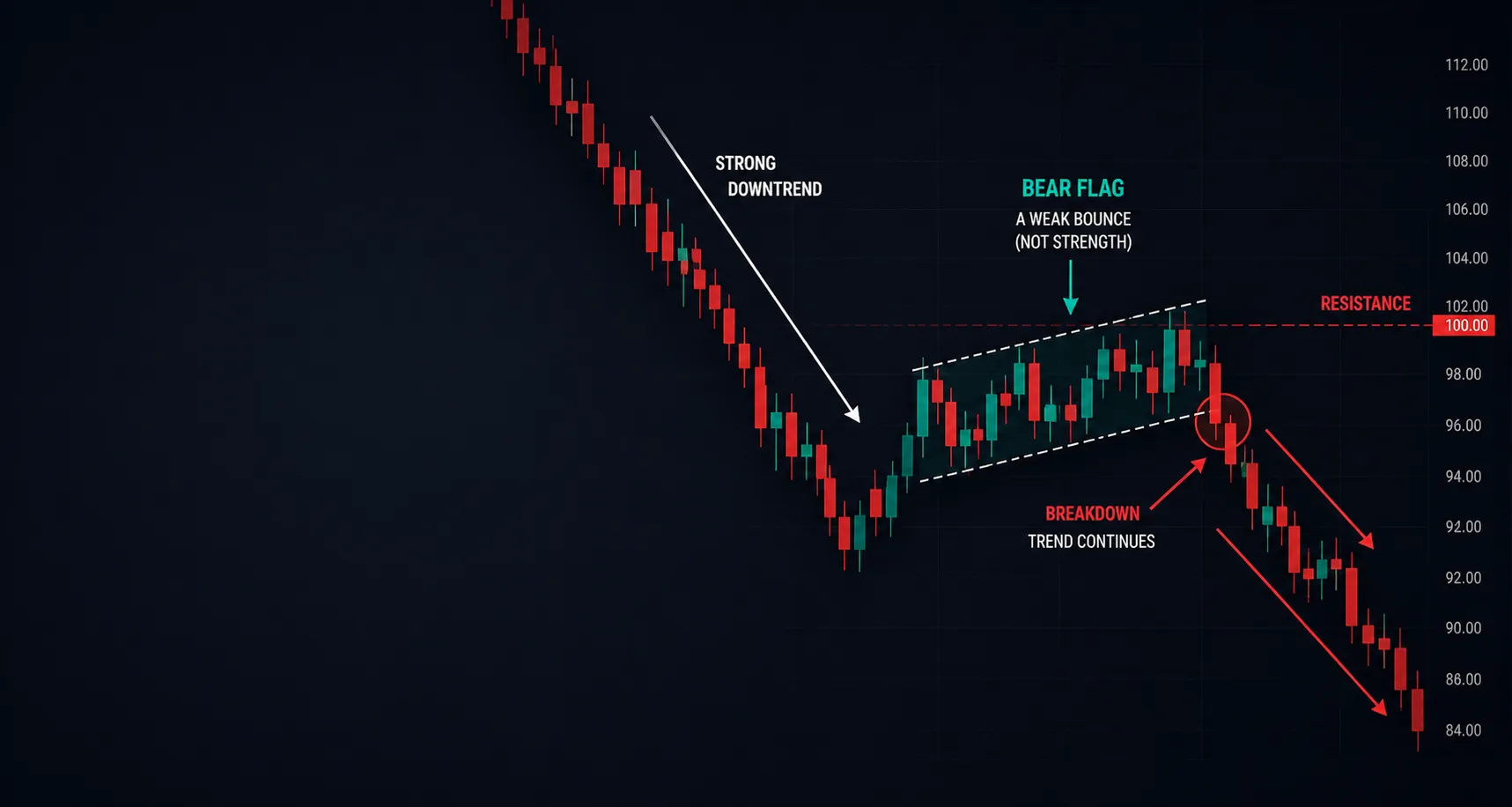

A bear flag is often a pause in a downtrend, not a real reversal.

Weak bounces can trap traders who buy before structure changes.

Context matters more than the pattern name — trend comes first.

The Insight
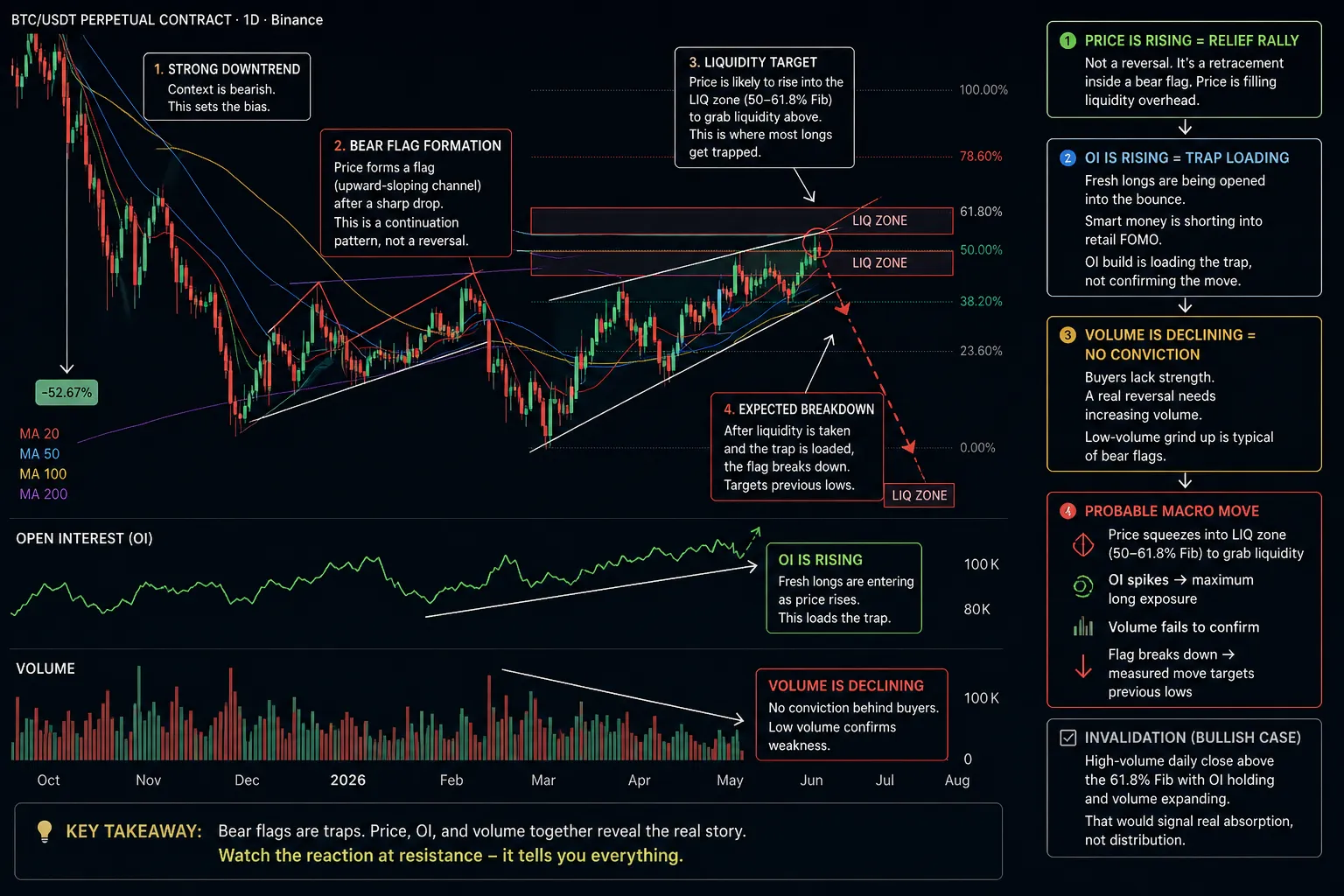
A bear flag usually starts with a strong move down, followed by a weak, controlled bounce. To inexperienced traders, that bounce can look like strength. To experienced traders, it often looks like a pause before continuation.

What This Means
The trap is believing every bounce is the start of a reversal. In a downtrend, price can lift just enough to attract buyers before sellers regain control. The pattern matters, but the context matters more.
What Good Traders Do Differently
Good traders look for structure. They ask whether the bounce is actually reclaiming important levels, or whether it is simply drifting upward with weak momentum before another breakdown.

How to Apply This
When you see a sharp drop followed by a weak bounce, slow down. Mark the trend, the breakdown level, the lower highs, and the point where the bear flag would fail. Do not treat a bounce as bullish until price actually proves it.

The Real Lesson
Bear flags teach one of the most important chart-reading lessons: not every recovery is real. Sometimes the market is not reversing — it is reloading for continuation.
What looks like a reversal can simply be a pause before the trend continues.— TradeTravelChill bear flag lesson