
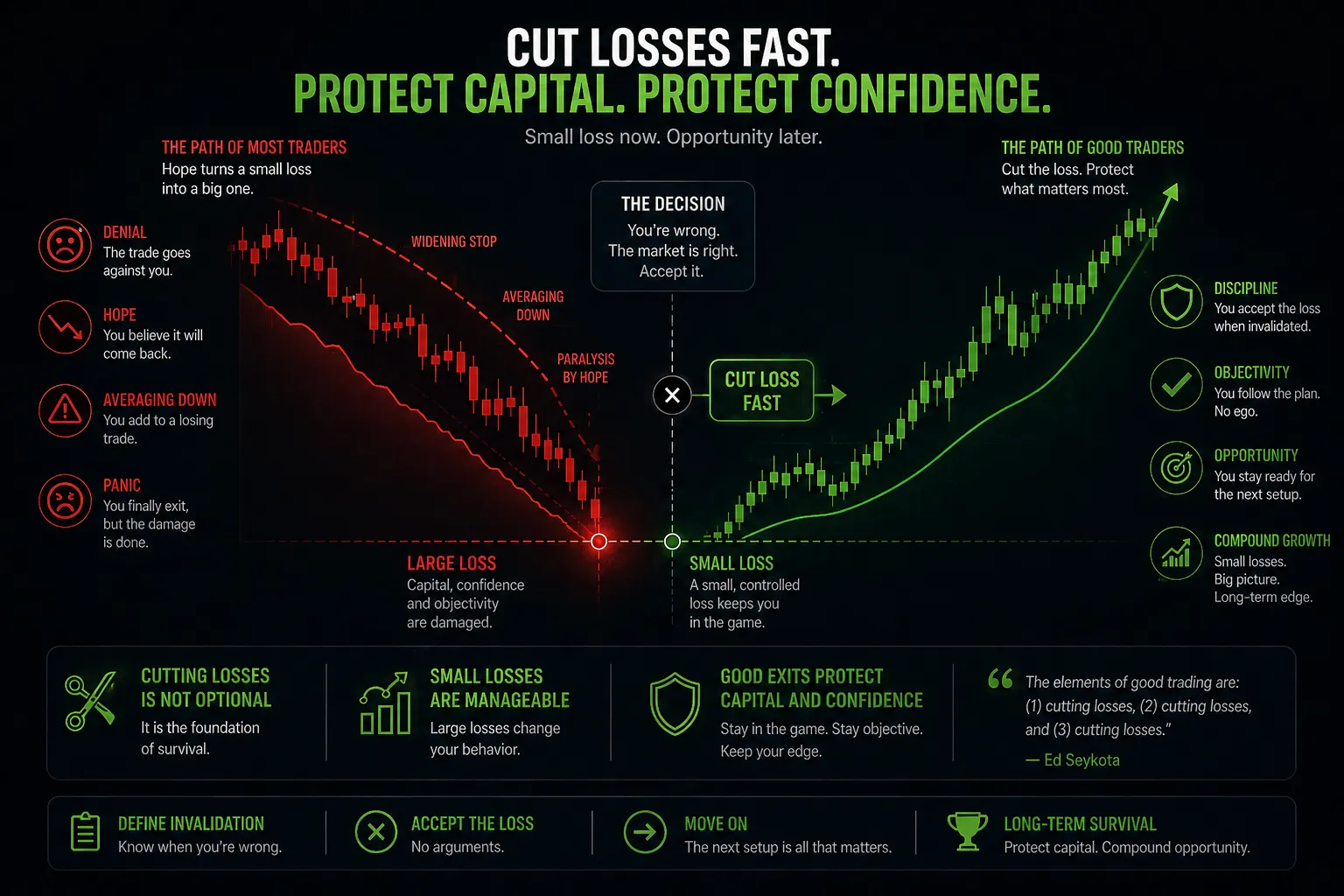
Cutting losses is not optional — it is the foundation of survival.

Small losses are manageable; large losses change your behavior.
Good exits protect both your capital and your confidence.

The Insight
Most traders know they should cut losses, but they hesitate when the loss is real. Ed Seykota’s point is intentionally repetitive because the lesson is that important: good trading starts with accepting small losses before they become large ones.

What This Means
A losing trade is not the problem. Refusing to close a losing trade is the problem. When traders delay exits, they usually move from process to hope. The trade stops being a setup and becomes an argument with the market.
What Good Traders Do Differently
Good traders treat stops and exits as part of the trade, not as an afterthought. They decide where the idea is invalidated, accept the loss when that level is reached, and move on without trying to win the argument back immediately.

How to Apply This
Before entering, define the exact condition that proves the trade wrong. If that condition happens, exit. Do not widen the stop, average down emotionally, or wait for the market to rescue the idea. Take the small loss while it is still small.

The Real Lesson
Losses are part of trading. Large, uncontrolled losses are usually self-inflicted. The trader who can cut losses quickly keeps capital, confidence, and objectivity intact — and that gives them the chance to take the next good setup.

The elements of good trading are: (1) cutting losses, (2) cutting losses, and (3) cutting losses.— Ed Seykota