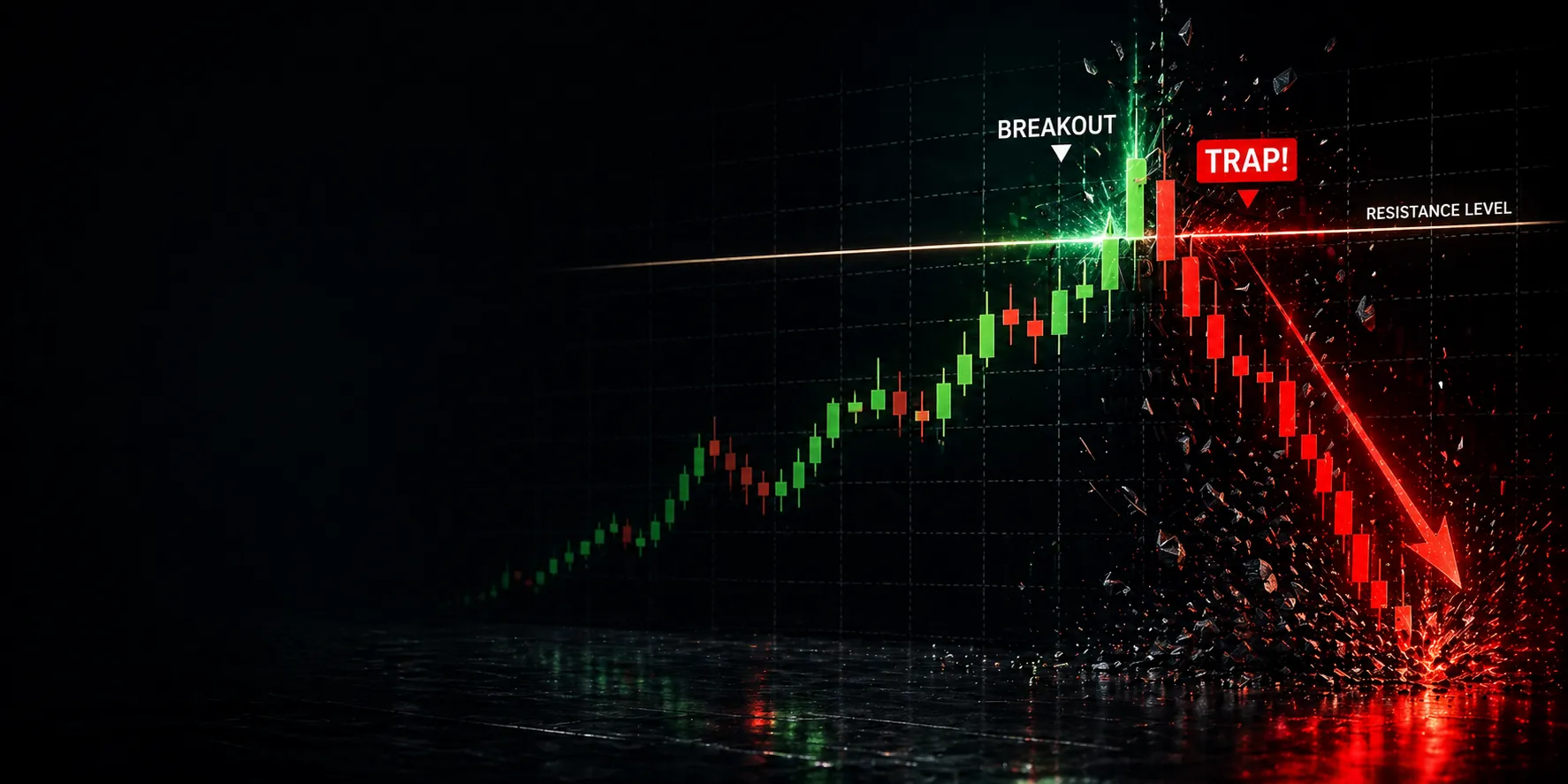

False breakouts trap traders who chase obvious moves too early.

A failed breakout often reveals where the market is really going.

The best signal is not the breakout — it is how price reacts after it.

The Insight
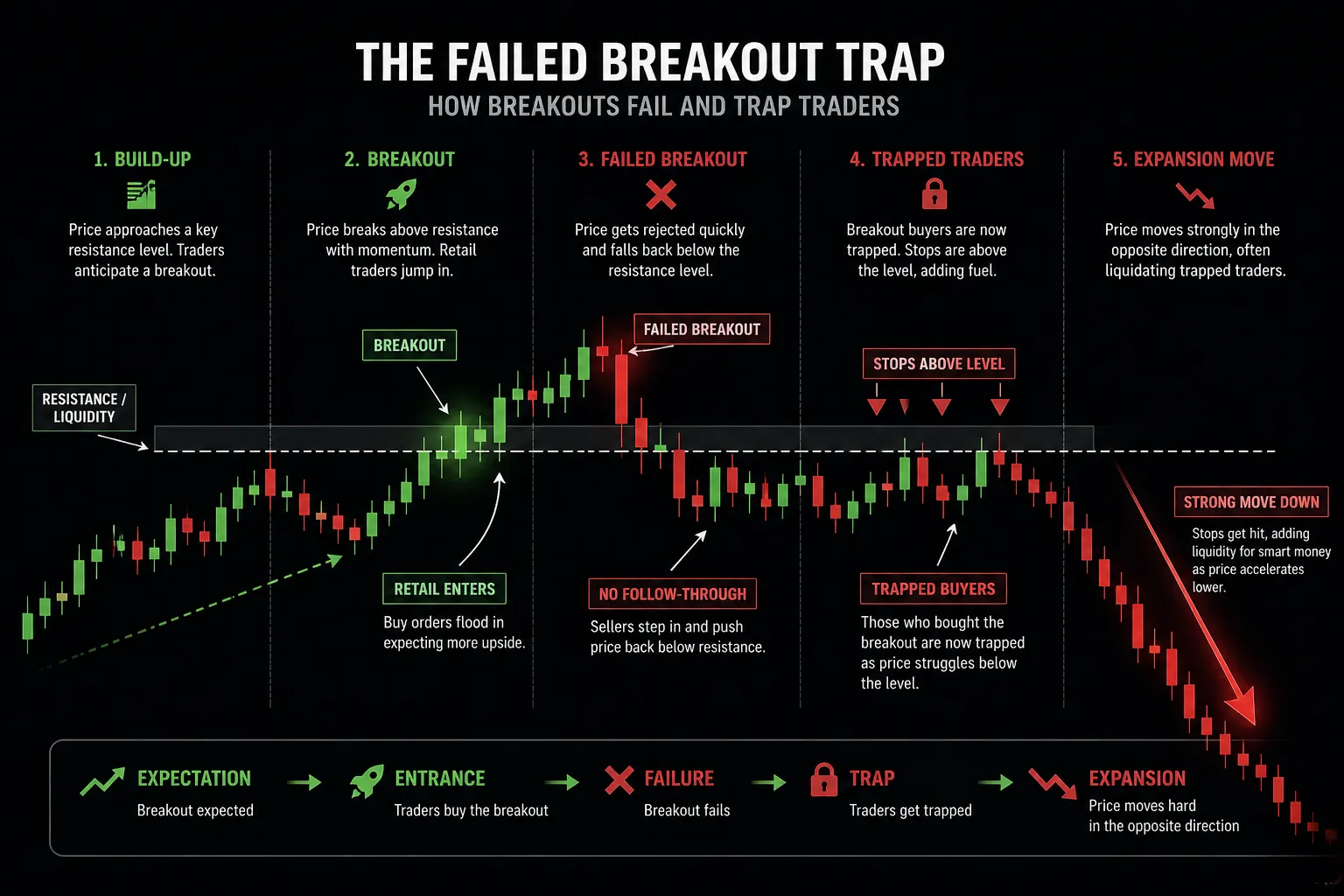
Most traders see a breakout and assume the move is confirmed. Nial Fuller’s lesson is that the market often deceives traders at obvious levels: price breaks out, attracts emotional entries, then quickly reverses back through the level.

What This Means
A breakout is only useful if price can sustain beyond the level. When price breaks out and immediately fails, the traders who chased the move are now trapped. Their exits can fuel the move in the opposite direction.

What Good Traders Do Differently
Good traders do not blindly buy every breakout or short every breakdown. They watch how price behaves after the level is tested. If the breakout fails, they understand that the failure itself may be the stronger signal.

How to Apply This
Mark the key support or resistance level first. Then wait to see whether price accepts above or below it. If price breaks out but quickly closes back inside the range, treat that failure seriously instead of chasing the original move.

The Real Lesson
The obvious trade is often where traders get trapped. A false breakout teaches you to stop reacting to the first move and start reading the reaction. The failure of a breakout can reveal more than the breakout itself.

A false-break can be thought of as a ‘deception’ by the market.— Nial Fuller