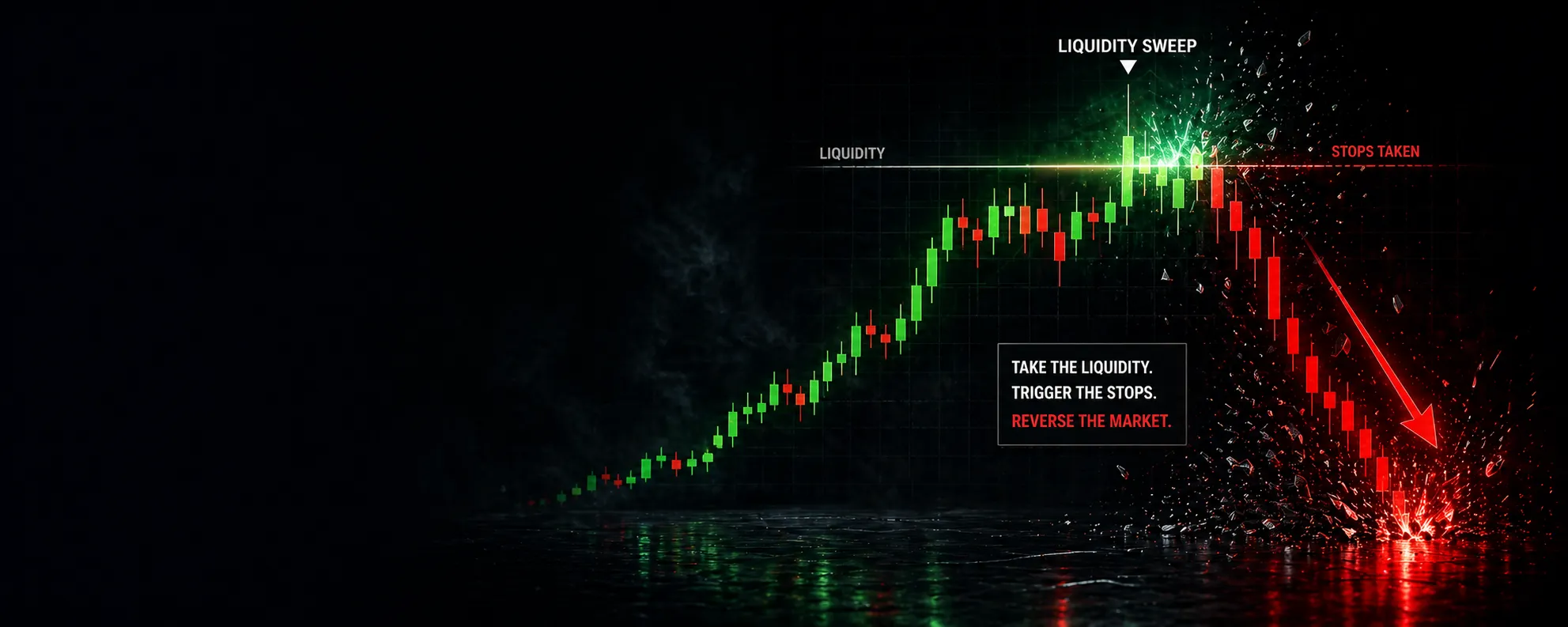

Liquidity often sits above obvious highs and below obvious lows.

A sweep is not automatically a breakout — the reaction matters most.

Waiting for failure and confirmation helps avoid buying the trap.
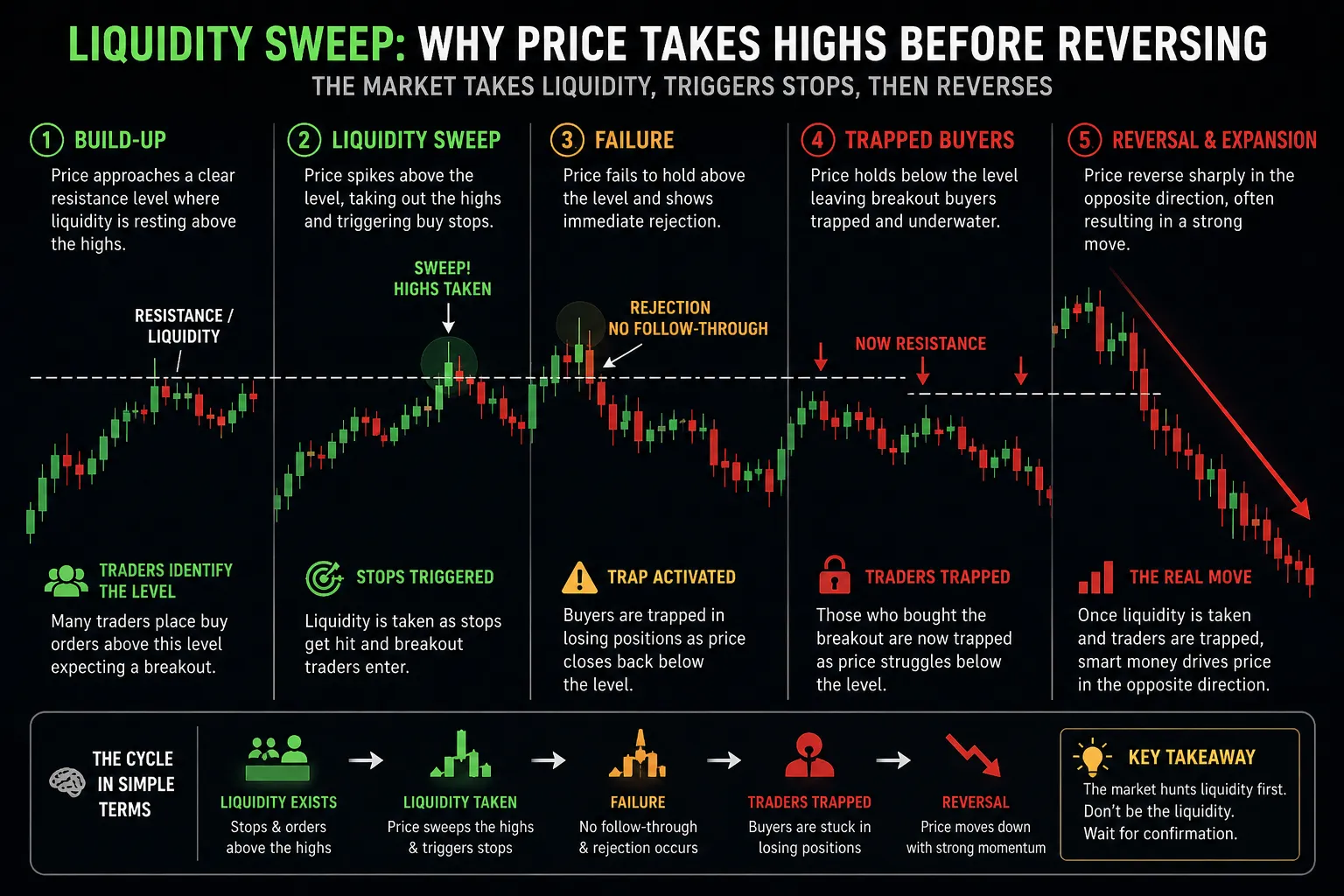

The Insight
A liquidity sweep happens when price moves beyond an obvious high or low, triggers stops and breakout entries, then fails to continue. What looks like a breakout can actually be the market collecting liquidity before reversing.

What This Means
Obvious levels attract orders. Stops collect above highs. Stops collect below lows. When price pushes through those levels, many traders assume continuation, but the real signal is what happens after the level is taken.
What Good Traders Do Differently
Good traders do not chase the first push through an obvious level. They watch the reaction. If price sweeps the level, rejects, and closes back inside the prior range, they understand that the breakout may have trapped late buyers or sellers.

How to Apply This
Mark the obvious highs and lows before you trade. If price runs one of those levels, do not immediately assume breakout. Wait for rejection, a close back through the level, or a structure shift that confirms the sweep has failed.

The Real Lesson
The market often moves through obvious levels before making the real move. The trader who understands liquidity sweeps stops reacting emotionally to stop runs and starts waiting for evidence that the move has failed.

Price often takes liquidity first — the reaction after the sweep tells you whether the move is real.— Price Action Concept