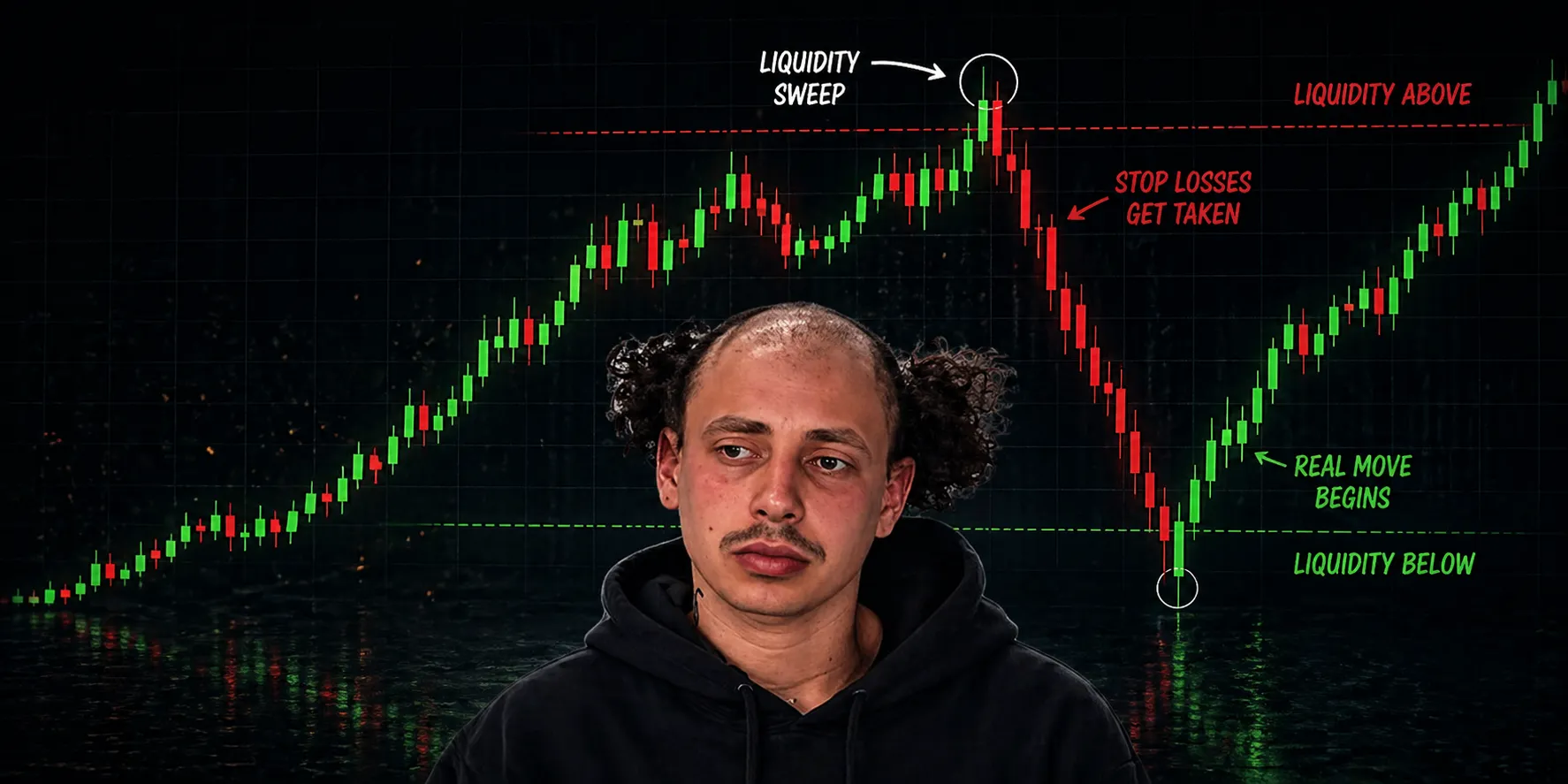

Liquidity is resting orders — especially obvious retail stop losses.

Stops below lows and above highs can become the fuel for large players.

A real sweep needs rejection and displacement, not just a wick through a level.

The Insight
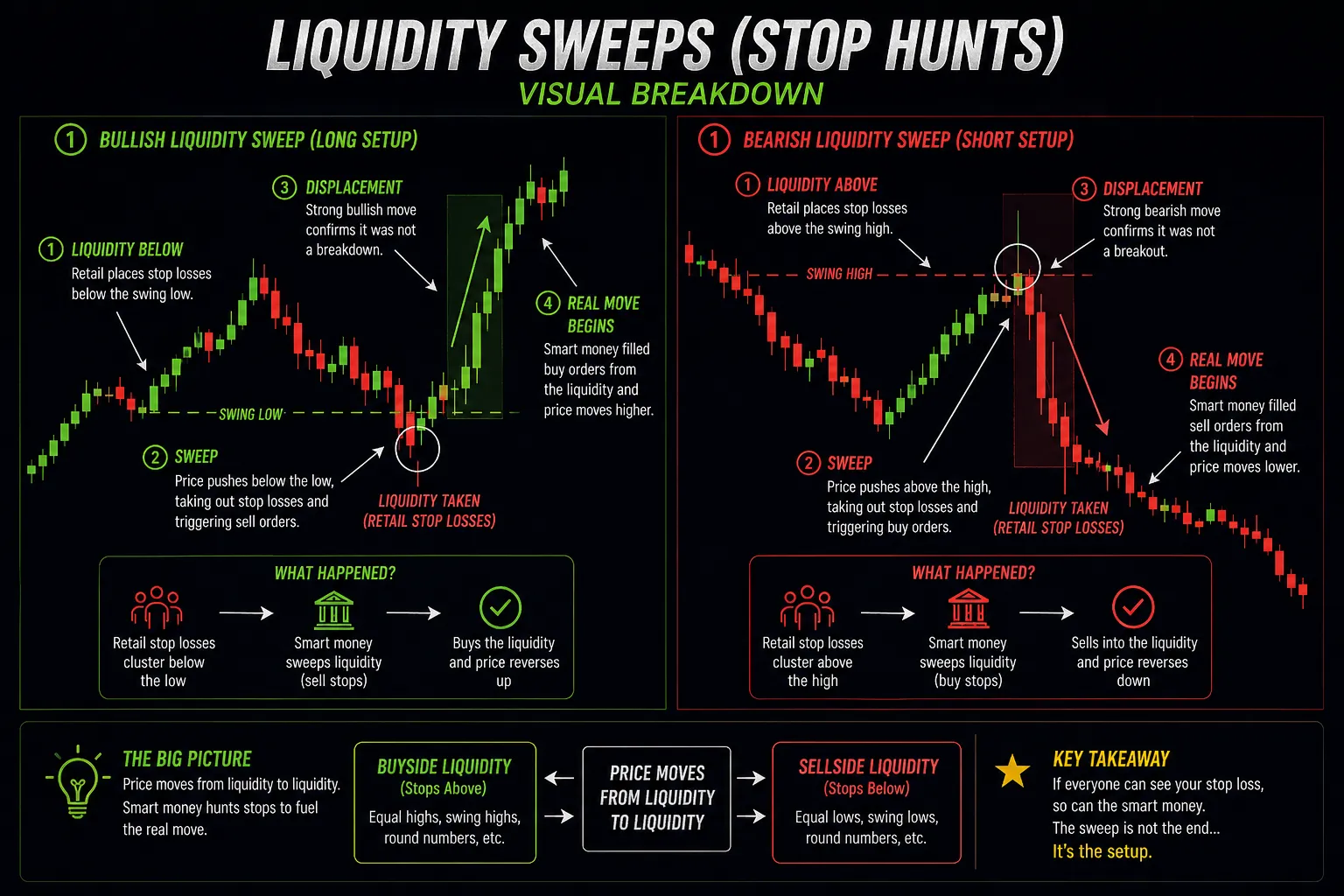
Liquidity is not just “how easy it is to buy or sell.” In this lesson, liquidity means resting orders — especially retail stop losses. When many traders place stops below the same swing low or above the same swing high, those orders become fuel for the next larger move.

What This Means
Retail traders often place stops in the most logical places: below support, below higher lows, above resistance, or above lower highs. The problem is that everyone else sees those same levels. When price runs those stops, it is not always random noise — it may be the market creating liquidity so larger players can fill positions.

What Good Traders Do Differently
Good traders stop thinking like victims of stop hunts and start reading them as information. They look for the level that was swept, whether price rejected after the sweep, and whether displacement followed. The sweep alone is not enough — the reaction confirms whether it was a liquidity grab or a real breakout.

How to Apply This
Before entering, mark obvious swing highs, swing lows, equal highs, equal lows, and support or resistance where stops are likely resting. If price runs those levels, wait. Look for a break-and-close back inside the level, an SFP-style wick rejection, and then displacement away from the sweep. That sequence is what turns a stop hunt into a usable setup.

The Real Lesson
The real lesson is that the stop-out is often not the end of the idea — it may be the beginning of the real opportunity. If the sweep is followed by rejection and displacement, it tells you that liquidity has been taken and larger participants may now be positioned for the move. The key is not to guess; it is to wait for proof.

It is not bad luck. It is not a coincidence. It is by design.— Trader Mayne