

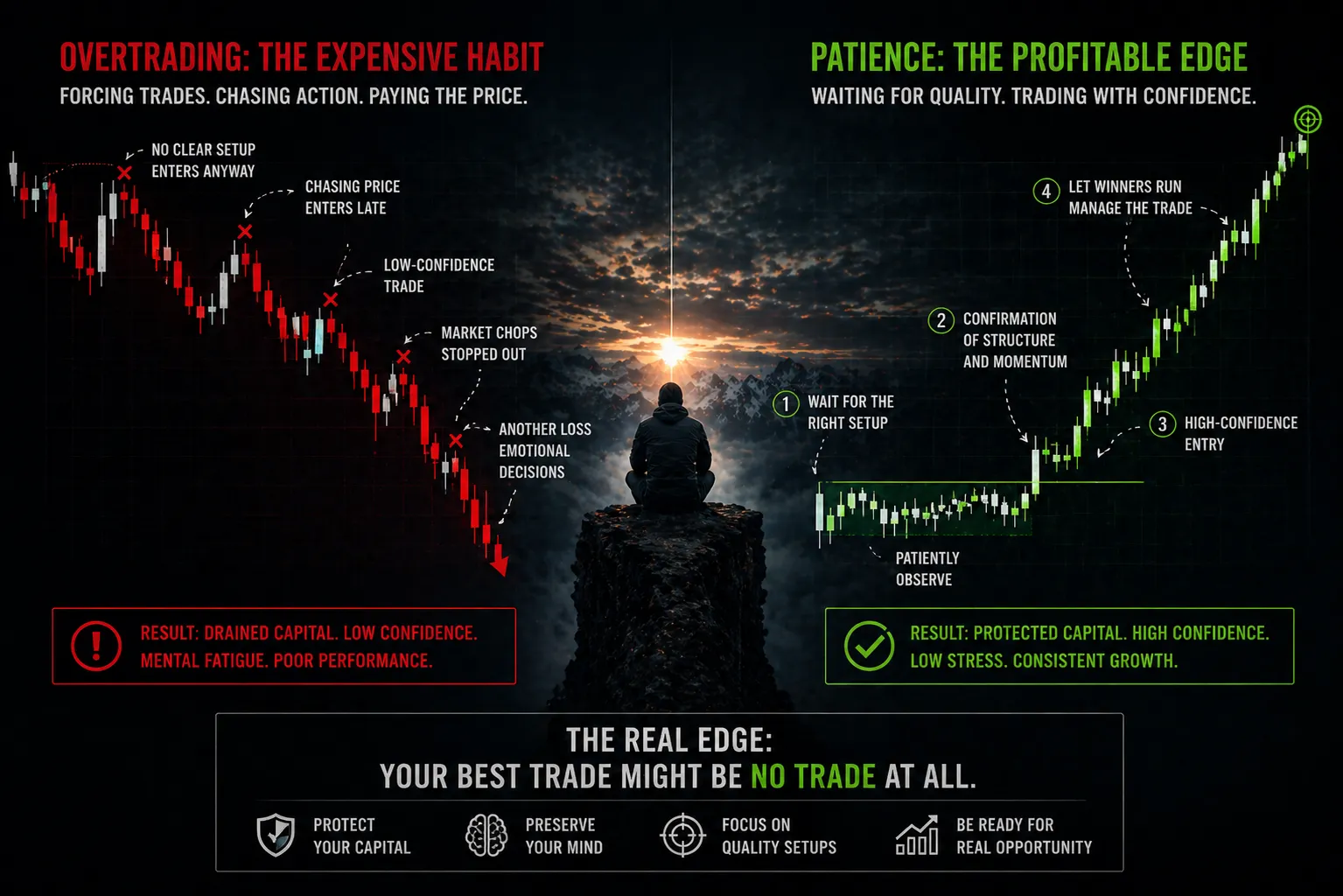
Not trading is an active decision, not inactivity.

Forcing trades in low-quality conditions creates avoidable losses.

Patience protects capital, confidence, and decision quality.

The Insight
Many traders feel like they always need to be doing something. They open trades because the market is moving, because they are bored, or because they are afraid of missing out. But no trade is still a position. Choosing to stay out when there is no clear edge is a disciplined trading decision.

What This Means
The market does not reward activity. It rewards good decisions. When traders force setups in choppy, unclear, or low-probability conditions, they usually pay for the need to act. The damage is not only financial — forced trades also weaken confidence and discipline.

What Good Traders Do Differently
Good traders understand that opportunity is not constant. They are selective. They know their setup, wait for the right conditions, and ignore everything else. They treat patience as part of their edge, not as a lack of action.

How to Apply This
Before entering any trade, ask: “Is this my setup, or am I forcing it?” If the answer is unclear, stay out. Build rules for when not to trade, such as avoiding chop, unclear structure, low-volume moves, or trades taken only because you feel impatient.

The Real Lesson
Protecting capital is not only about cutting losses. It is also about avoiding trades that never deserved your risk in the first place. The trader who can sit through noise and wait for real opportunity keeps both money and mental clarity intact.
The market pays you for being right, not for being busy.— Trading Principle