

Protecting capital matters more than chasing profits.

Losses can damage your account faster than wins can rebuild it.
Survival is the foundation of long-term consistency.

The Insight
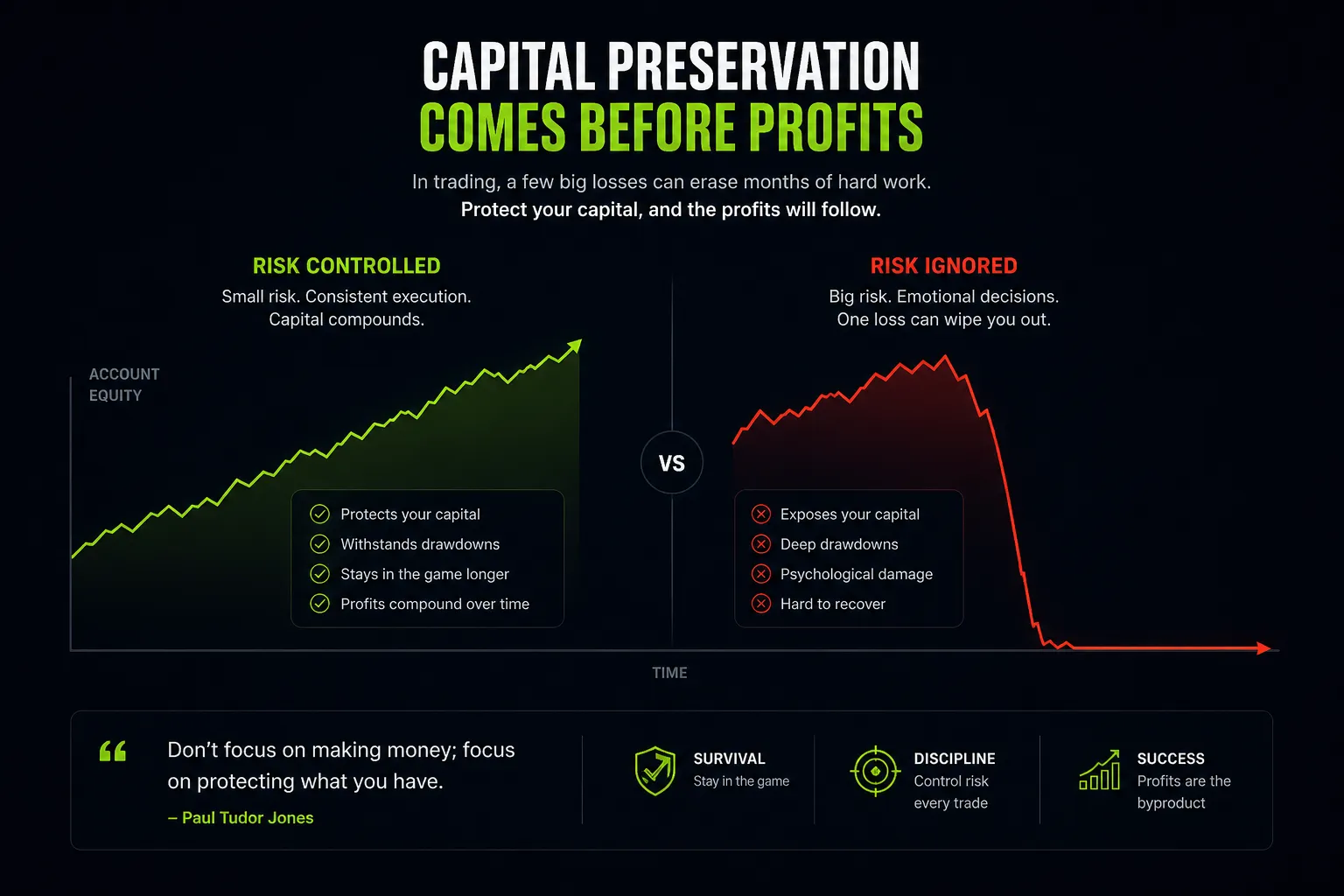
Most traders enter the market thinking about how much they can make. Professionals think first about how much they can lose. Paul Tudor Jones built his career around a simple defensive principle: protect your capital first, because if you lose it, you lose the ability to keep playing the game.

What This Means
Chasing profits often leads to oversized positions, forced trades, and emotional decisions. Protecting capital does the opposite. It makes your losses controlled, your decisions clearer, and your trading more sustainable. The difference is not only strategy — it is priority.

What Good Traders Do Differently
Good traders define risk before entering. They know where they are wrong, how much they can lose, and when they need to step aside. They do not ask only, “How much can I make?” They ask, “What happens if I am wrong?”

How to Apply This
Before every trade, set your stop, determine your position size, and define your maximum loss. If the potential loss feels too large, reduce your size instead of trying to force conviction. The goal is not to win every trade. The goal is to stay in the game long enough for your edge to matter.

The Real Lesson
Trading success is not built on one big win. It is built by avoiding account-damaging losses, staying consistent, and surviving long enough for good decisions to compound. If you protect your capital, every future opportunity remains available.

Don’t focus on making money; focus on protecting what you have.— Paul Tudor Jones