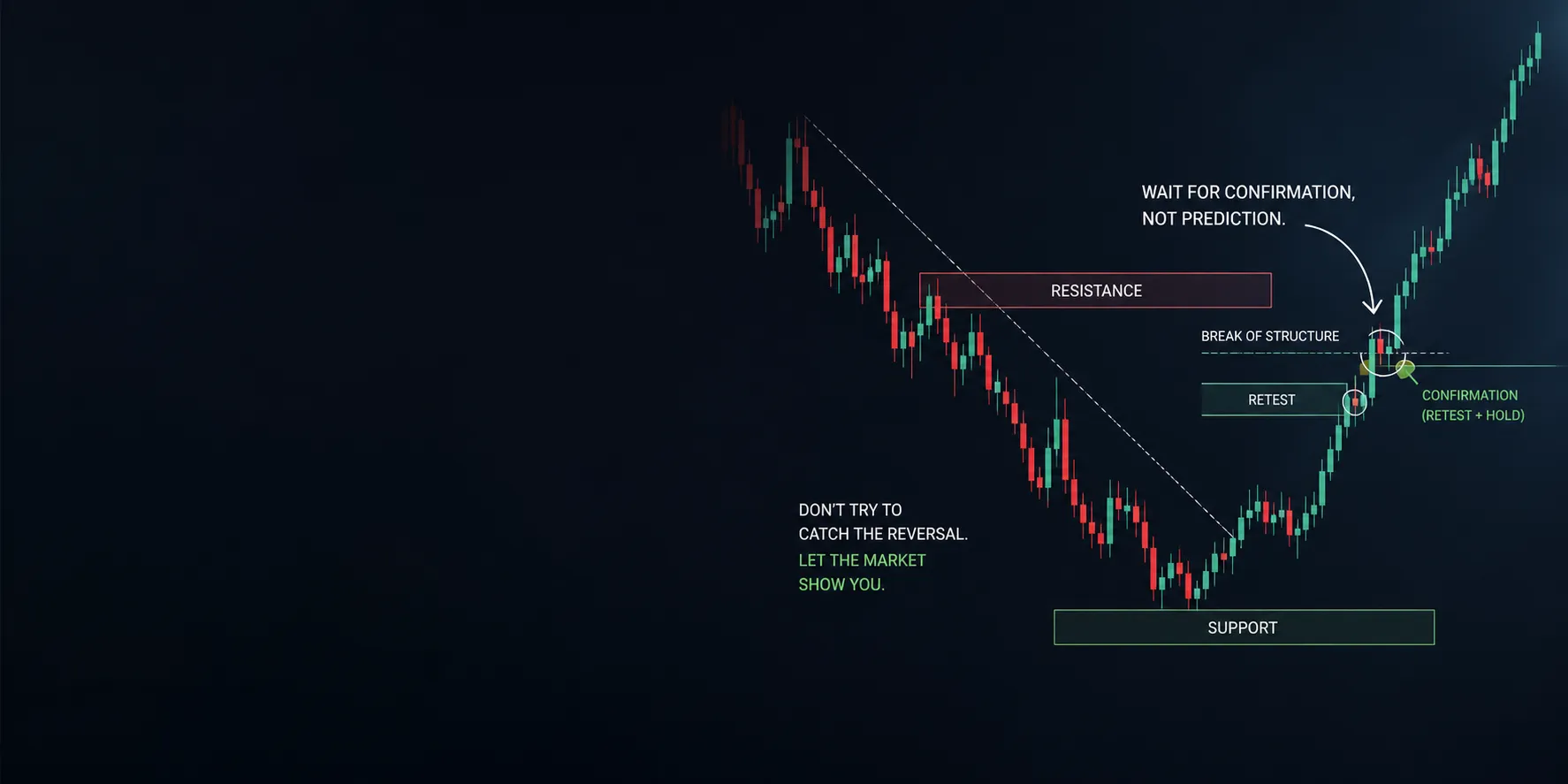

Most failed reversal trades come from entering before confirmation.

A true reversal leaves evidence through structure, reaction, and follow-through.

The best reversal trades often feel late, but they are usually safer.

The Insight
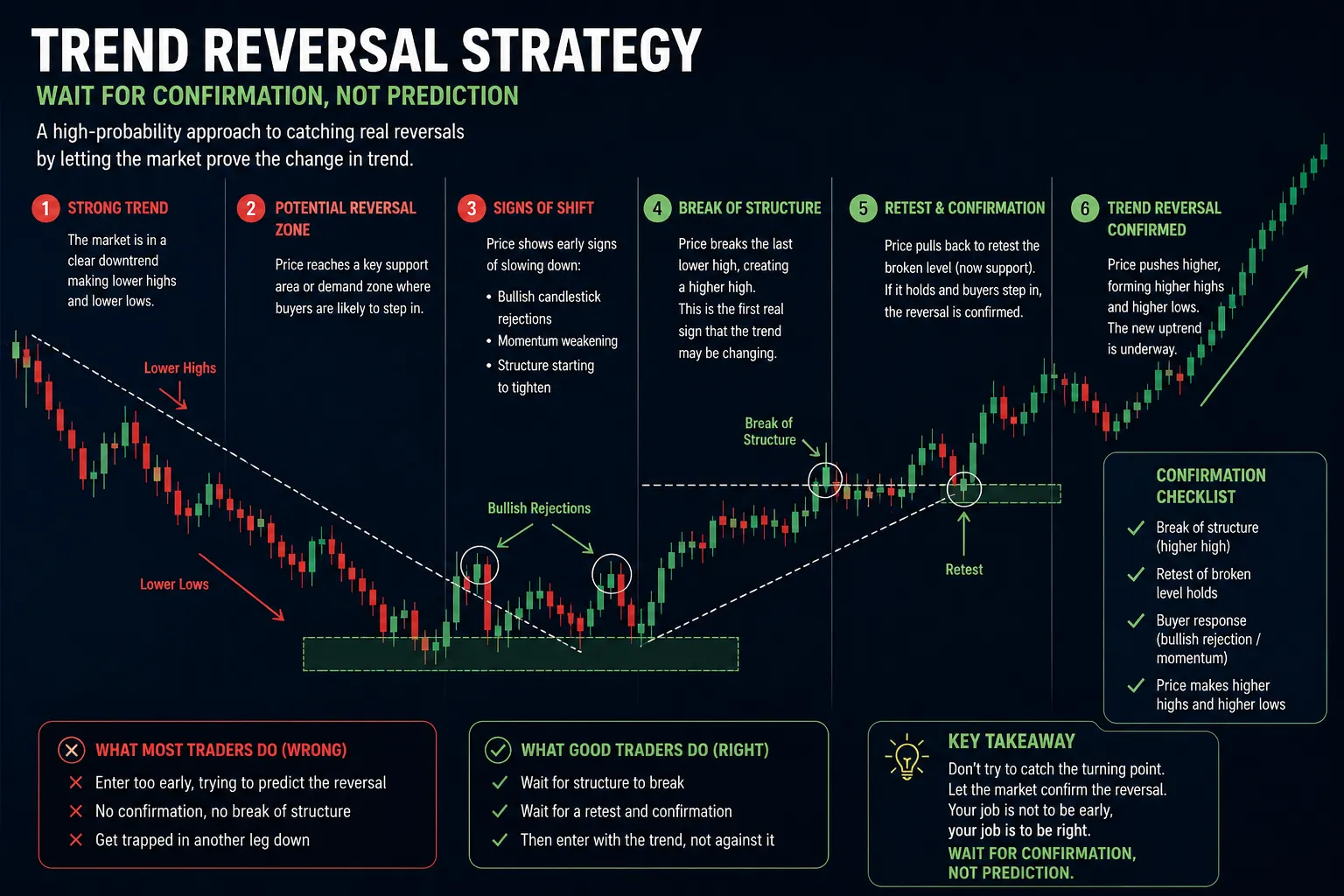
Most traders try to catch reversals before the market has actually turned. They anticipate the move, enter early, and hope the chart follows through. TradeTravelChill’s lesson is that a reversal strategy should start with confirmation — not prediction.

What This Means
A market turning direction leaves evidence. Structure breaks. Momentum shifts. Levels flip. Without those signals, what looks like a reversal may only be a pause, a bounce, or a trap inside the existing trend.

What Good Traders Do Differently
Good traders do not need to be first. They wait for a break of structure, a failed continuation, a clean rejection, or a level reclaim before committing. They understand that being early is not the same as being right.

How to Apply This
Before taking a reversal trade, define what proves the trend has changed. That might be a break and hold above resistance, a reclaim of a key level, a failed breakdown, or strong follow-through after rejection. Enter after confirmation, not before it.

The Real Lesson
Most reversal losses do not come from the idea being impossible. They come from taking the idea too early. The trader who waits for confirmation avoids traps, trades with more confidence, and builds consistency by letting the market prove the shift first.

Do not predict the reversal. Wait for the market to confirm it.— TradeTravelChill lesson