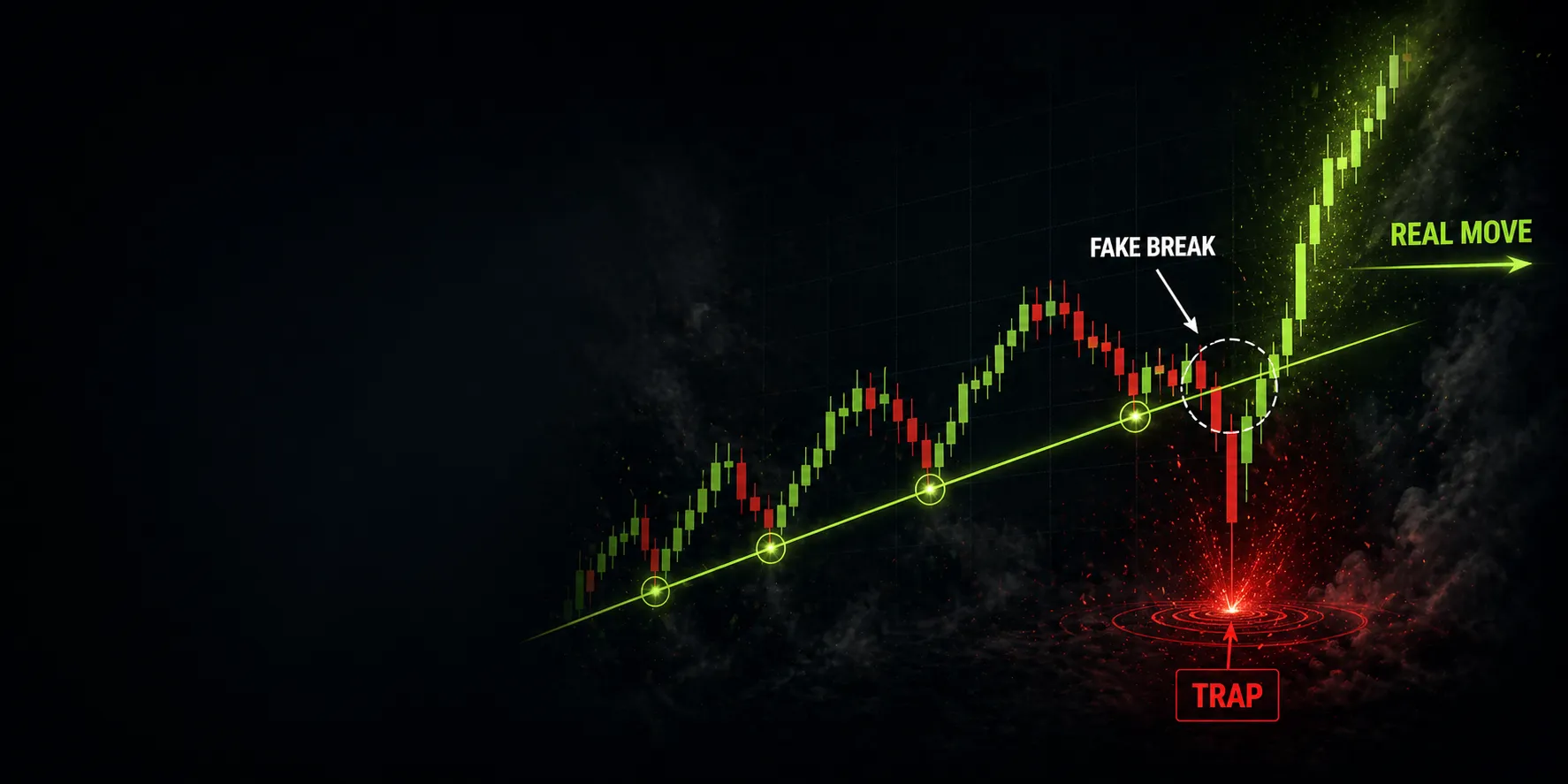

Trendlines are not signals by themselves — they are decision zones.

Weak breaks often trap breakout traders before price reverses.

Real breaks usually show momentum, structure, and follow-through.
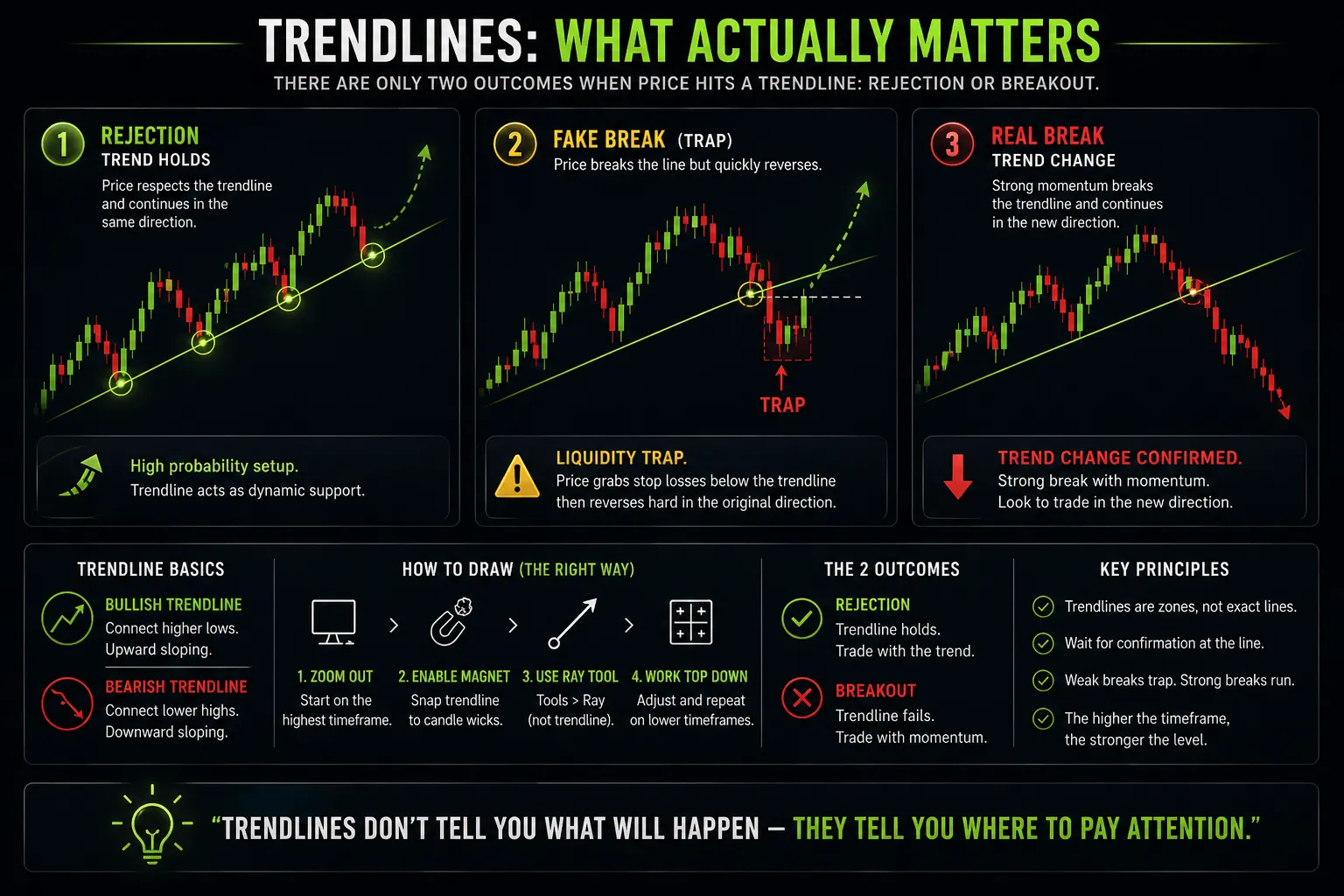

The Insight
Most traders think the edge is in drawing the perfect trendline. It is not. The edge is in understanding what price does when it reaches that line. A trendline gives you a place to pay attention, but the reaction tells you whether the market is rejecting, breaking, or trapping traders.

What This Means
A trendline can act like dynamic support or resistance, but it is not magic. Price can reject from it, break through it, or fake a break before reversing. The dangerous part is that fake breaks often look convincing in real time, especially to traders who want to be early.

What Good Traders Do Differently
Good traders do not trade the line blindly. They look for obvious swing points, draw from wicks, avoid forcing lines to fit their bias, and then wait for evidence. Weak candles through a trendline can signal a fake break. Strong candles, follow-through, and a market-structure shift give the break much more weight.

How to Apply This
Start on the higher time frame to understand the larger trend, then move down only after the big picture is clear. Mark trendlines from meaningful swing highs or lows, not random points. When price reaches the line, ask whether it is rejecting, breaking with real momentum, or only poking through weakly. If structure confirms the move, look for the retest instead of chasing the first touch.

The Real Lesson
The real lesson is that trendlines do not predict the future. They show where the market may reveal intent. If price breaks weakly and fails, that is information. If price breaks with momentum and structure, that is also information. The line is not the trade — the reaction is.

Let the market prove itself before committing to a position.— Tom Crown