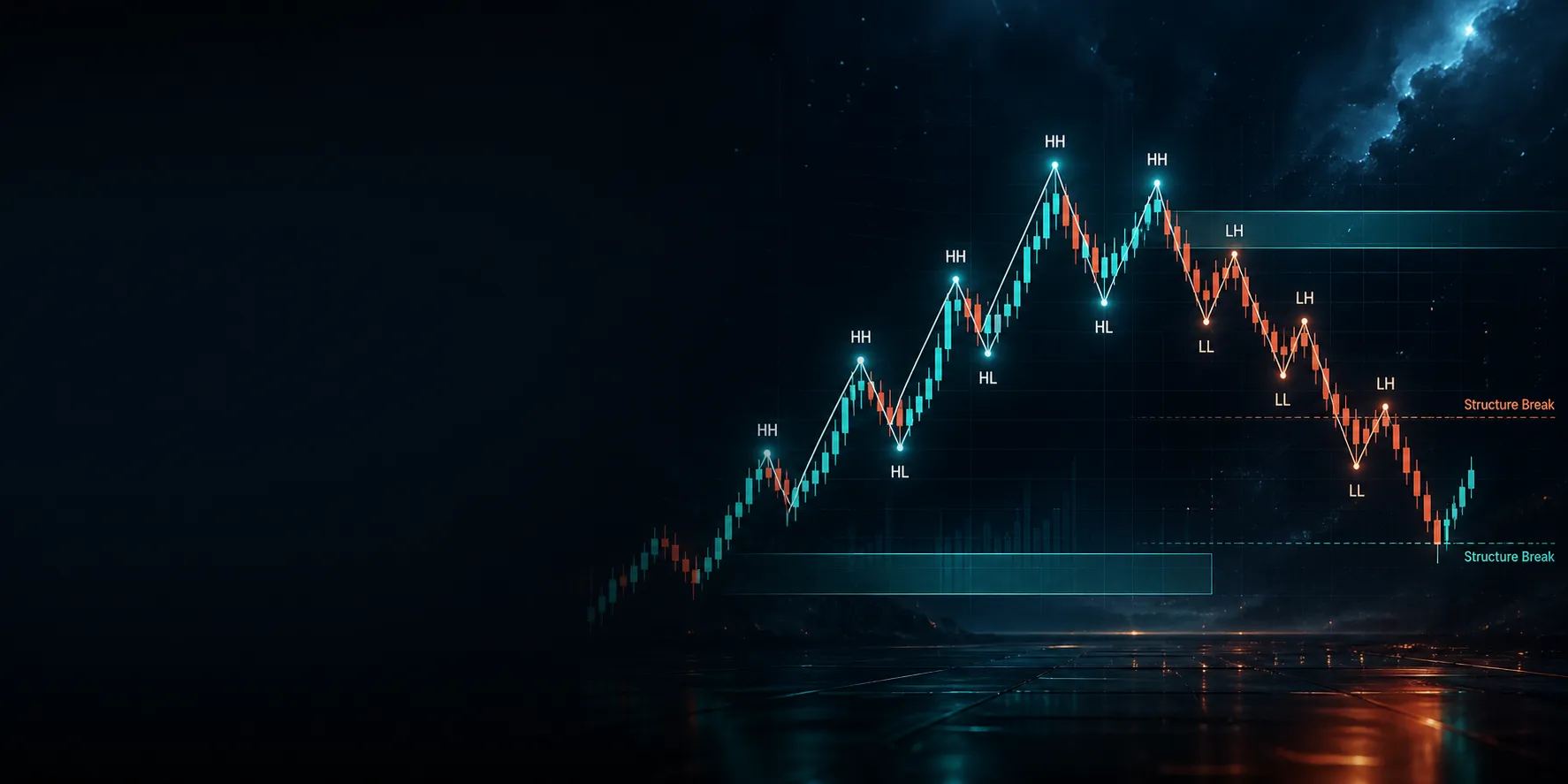

Market structure starts with correctly identifying major swing highs and lows.

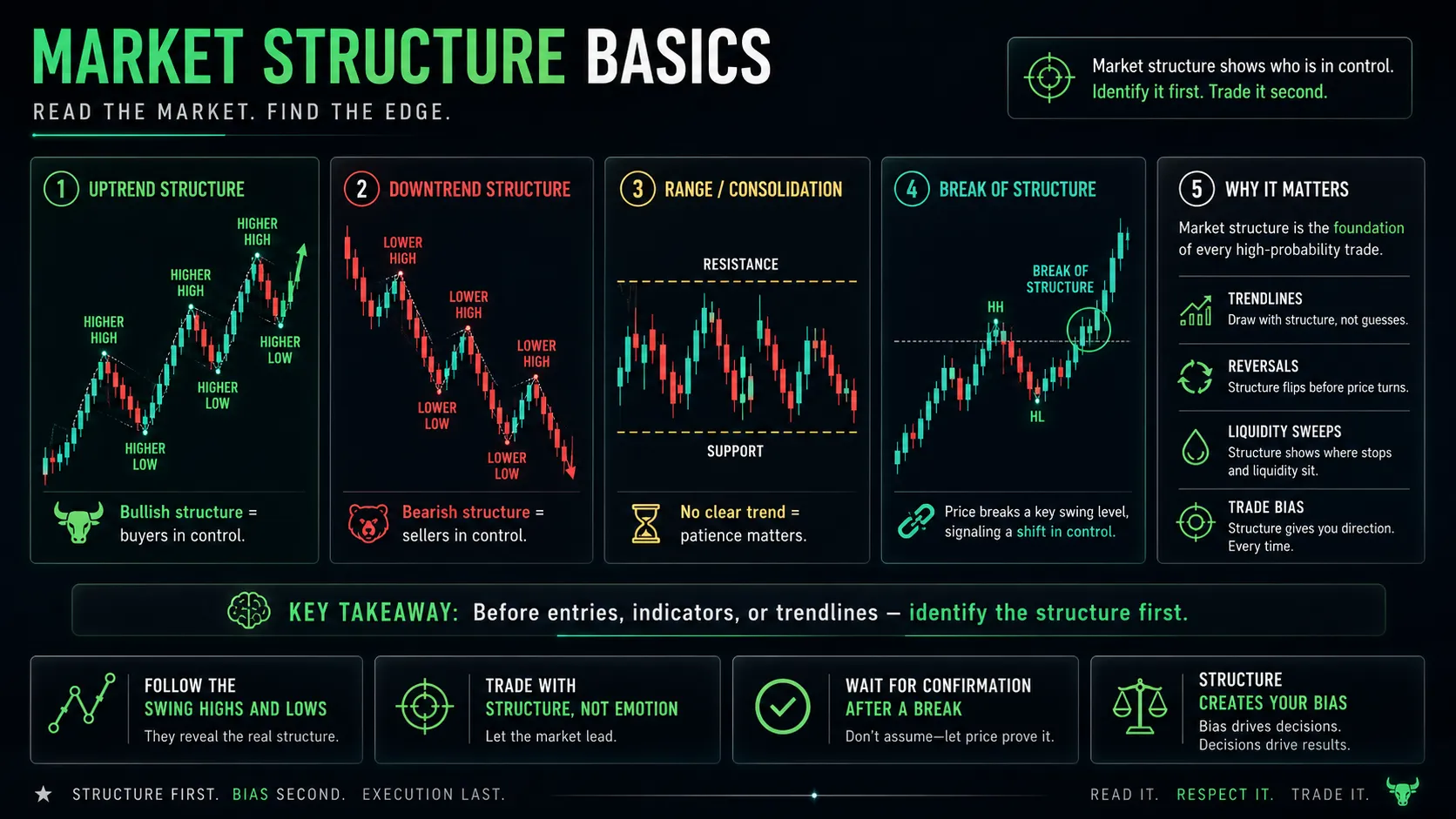
Higher highs and higher lows show bullish control; lower highs and lower lows show bearish control.

Structure tells you whether to look for reversals, continuation, or no trade at all.

The Insight
Before indicators, trendlines, liquidity sweeps, AMD, or entry signals, a trader needs to understand structure. Market structure is the map that shows whether buyers are in control, sellers are in control, or price is stuck in a range. If you cannot read the major swing highs and swing lows, every other concept becomes easier to misuse.

What This Means
In an uptrend, price makes higher highs and higher lows. In a downtrend, price makes lower highs and lower lows. But the important part is knowing which swings actually matter. Steven Hart explains that small one- or two-candle pauses should not automatically become major structure. Major swings require enough of a pullback to show that price has actually reacted, not just paused for a moment.

What Good Traders Do Differently
Good traders do not mark every tiny candle as structure. They separate major swing points from noise. They understand that everything between the last major swing high and major swing low is often just a pullback until price closes beyond that structure. That keeps them from flipping bias too early, chasing weak moves, or calling every pause a reversal.

How to Apply This
Start by marking the major swing high and major swing low on the chart. If price breaks and closes beyond the prior major swing in the direction of the trend, look for continuation. If price breaks and closes beyond the opposite side of structure, start watching for a possible reversal. Then wait for price to pull back into the new structure zone and show a reason to enter — do not guess before the structure has spoken.

The Real Lesson
The real lesson is that structure comes before strategy. A setup only makes sense inside the correct context. Trendlines, liquidity sweeps, AMD, order blocks, retests, and candlestick entries all depend on knowing what the larger structure is doing. If structure is bullish, you think differently. If structure is bearish, you think differently. If structure is unclear, the best trade may be no trade.

Market structure can be one of the most powerful tools you have in your trading arsenal.— The Trading Channel