

Logging entries, exits, and P&L is bookkeeping — not real journaling.

Reviewing psychological and execution data reveals the mistakes that keep repeating.

Real progress comes from finding patterns, tracking rule breaks, and changing behavior.
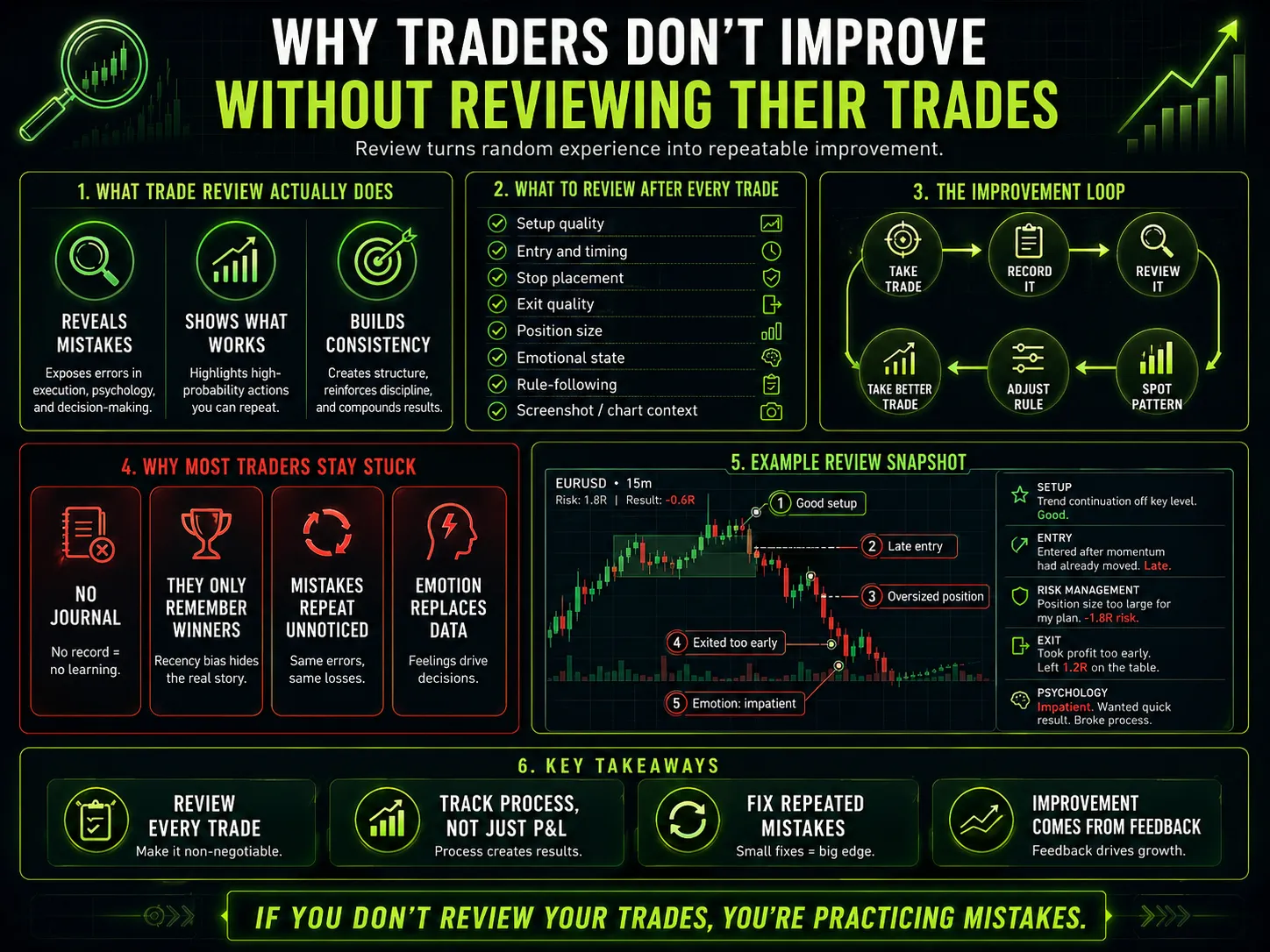

The Insight
Most traders think they are journaling when they are really just recording trades. Entry, exit, and P&L tell you what happened. They do not explain why it happened. Real journaling tracks execution, psychology, rule breaks, emotional state, setup type, and the repeating patterns behind your results.

What This Means
A trade journal becomes useful when it creates a feedback loop. Before the trade, you track your state: sleep, energy, stress, mood, bias, and rules. During the trade, you track whether you followed your process. After the trade, you review what repeated, what cost money, and what behavior needs to change.

What Good Traders Do Differently
Good traders do not only ask, “Did I win or lose?” They ask better questions: Did I follow the rules? Was I tired? Was I stressed? Did I chase? Did I move my stop? Did I trade my actual setup? Did this same mistake happen last week? That is where the useful data lives.

How to Apply This
Track the basics first: setup, entry, stop, target, outcome, and notes. Then add the data most traders avoid: emotional state, energy, sleep, rule-following, mistakes, execution score, and whether you would take the trade again. Once a week, review the data and look for repeated mistakes at the same times, in the same moods, or in the same setup types.

The Real Lesson
Trading more does not automatically make you better. Reviewing better does. A journal should show you what your mistakes cost, which habits keep repeating, and what needs to change next. If you never review the data, you are not improving — you are just collecting trades.

Logging trades records what happened. Reviewing trades explains why it keeps happening.— Trading Insight